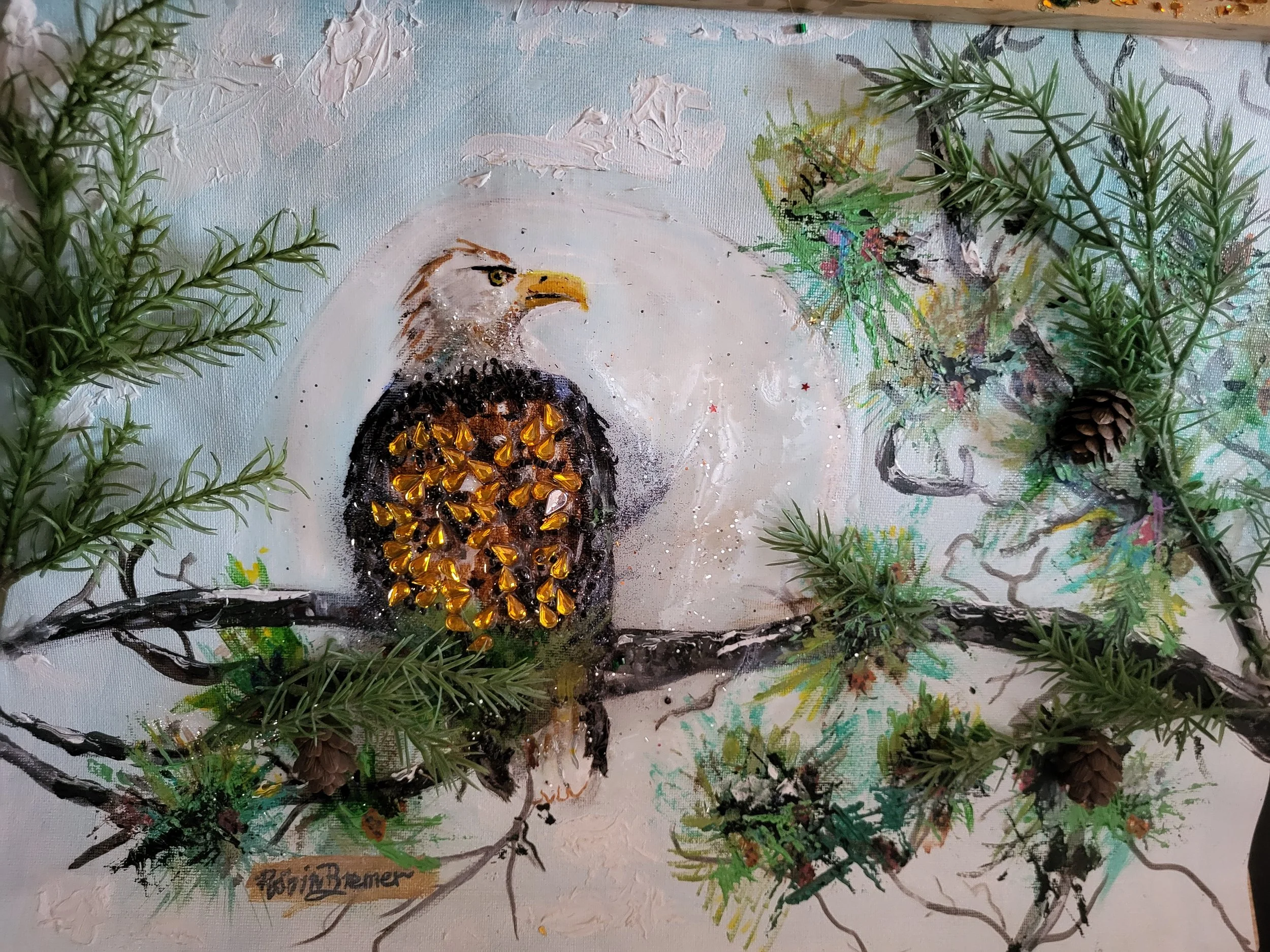
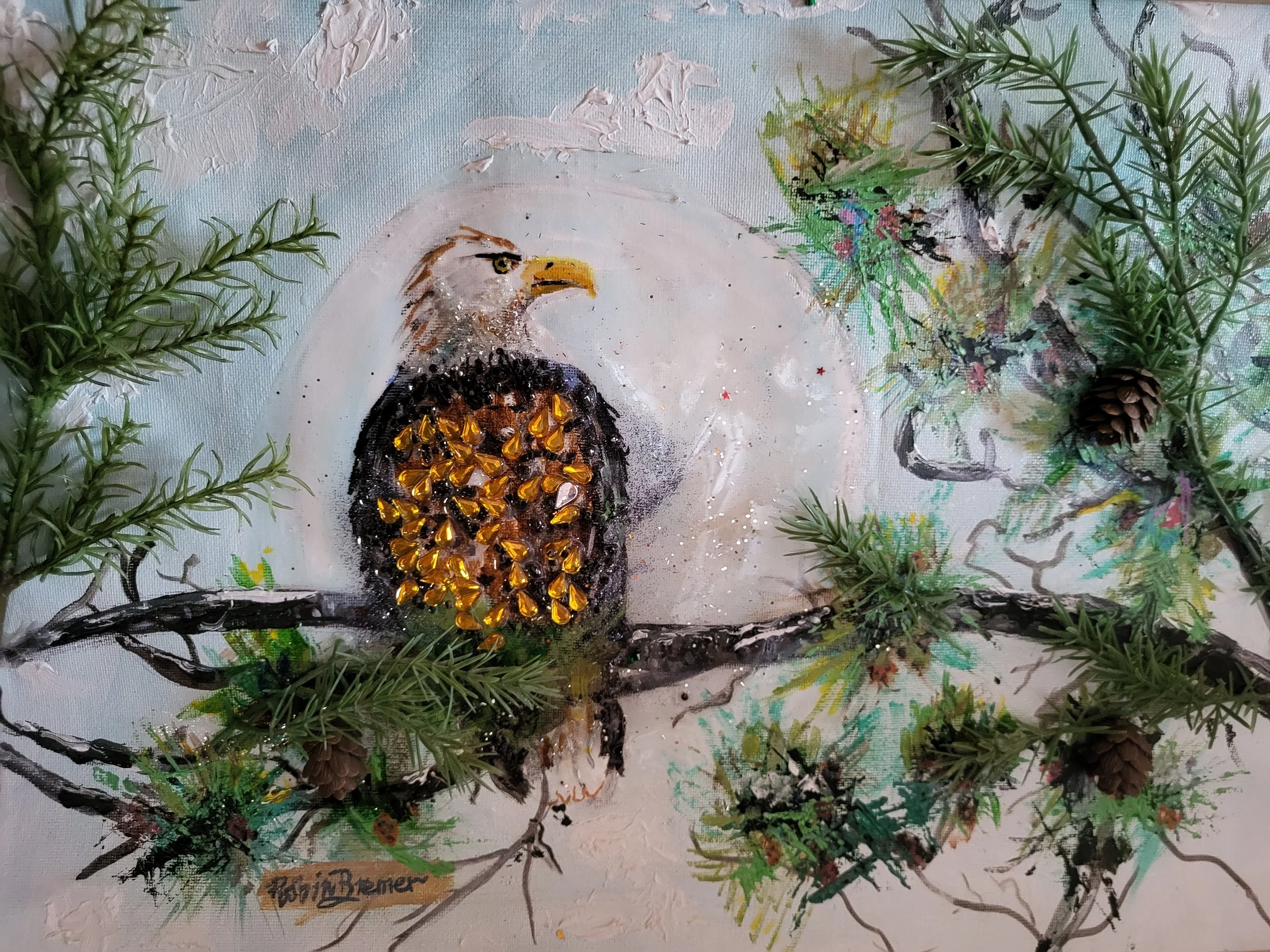
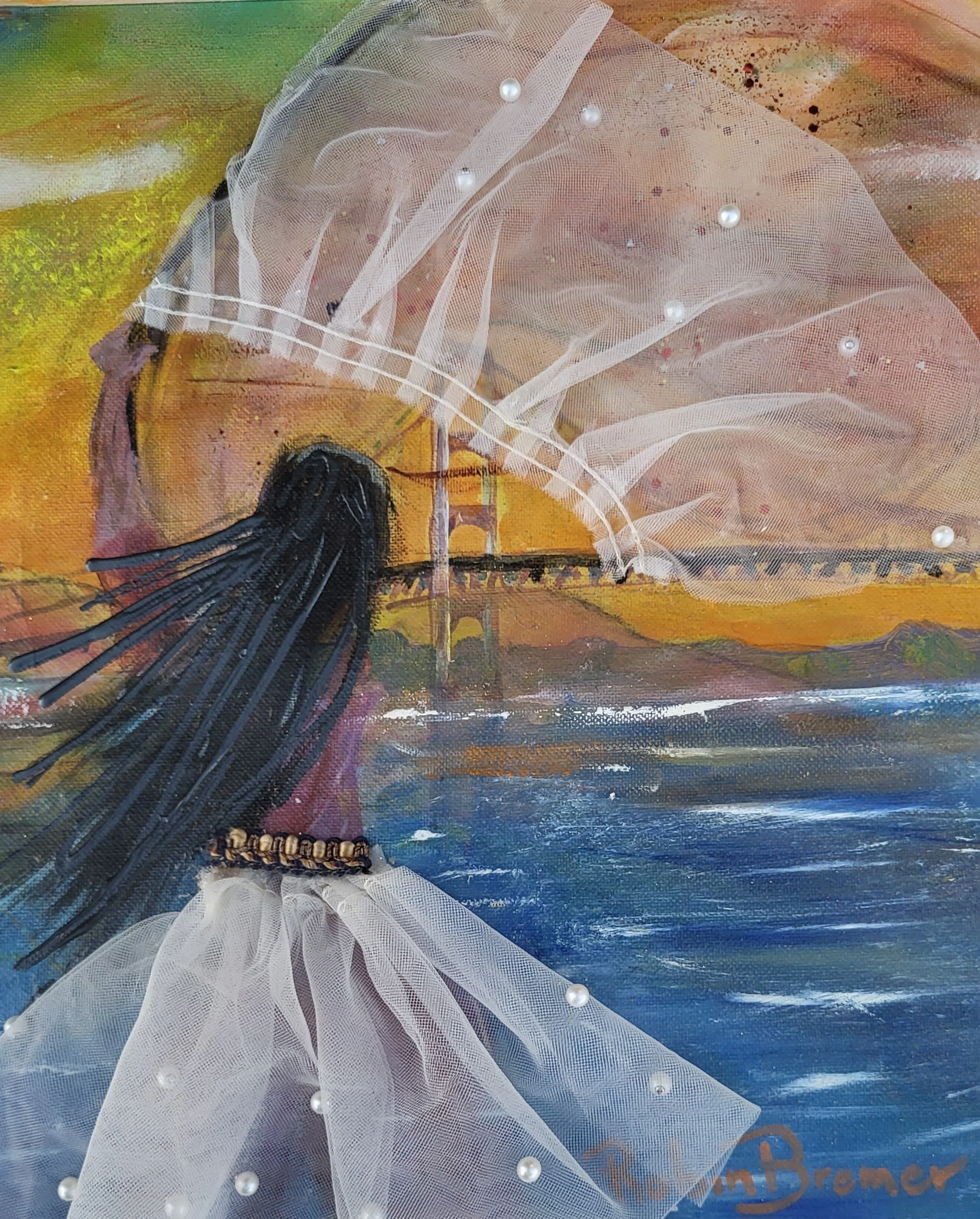
 Image 1 of 2
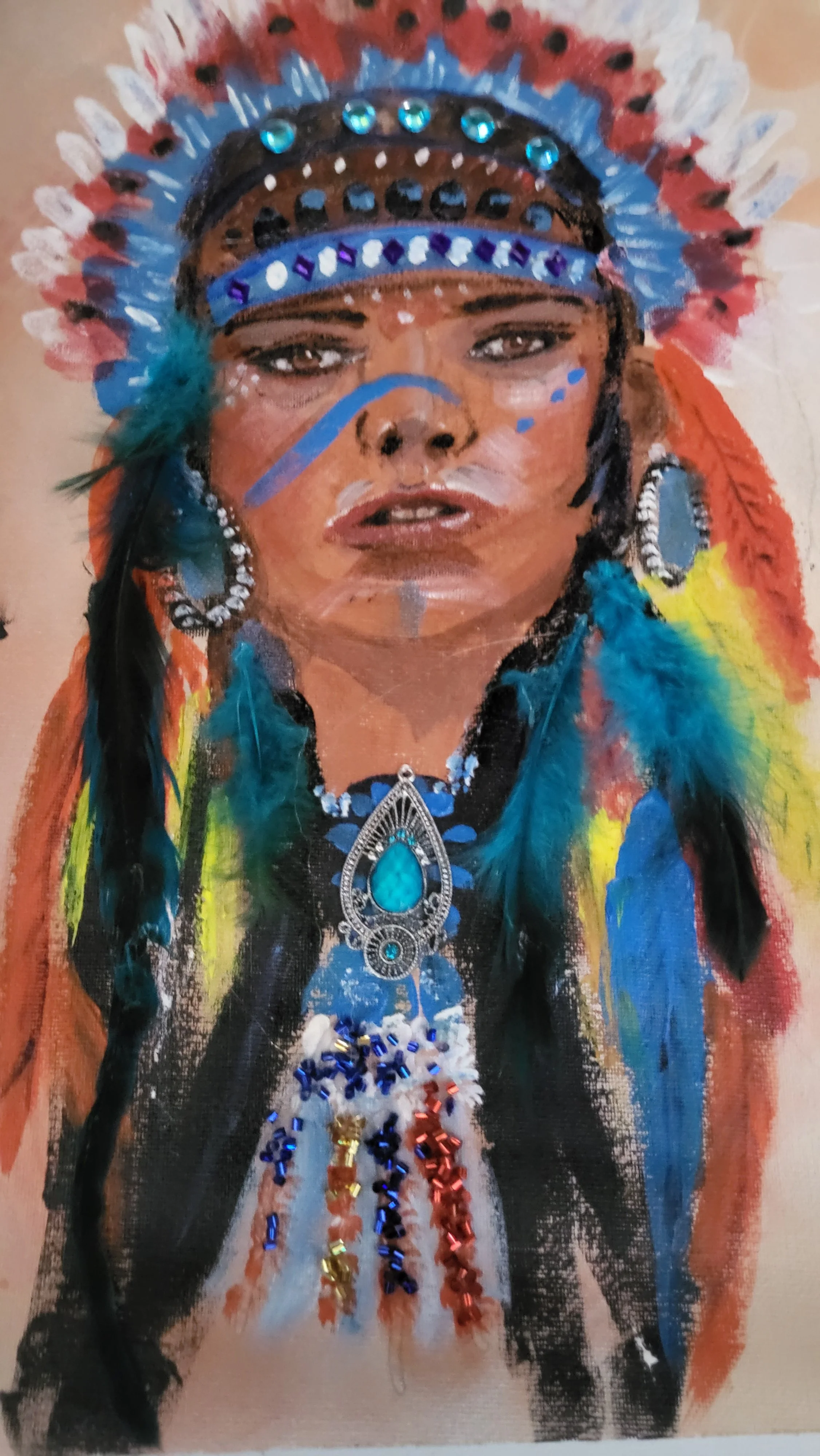 Image 2 of 2
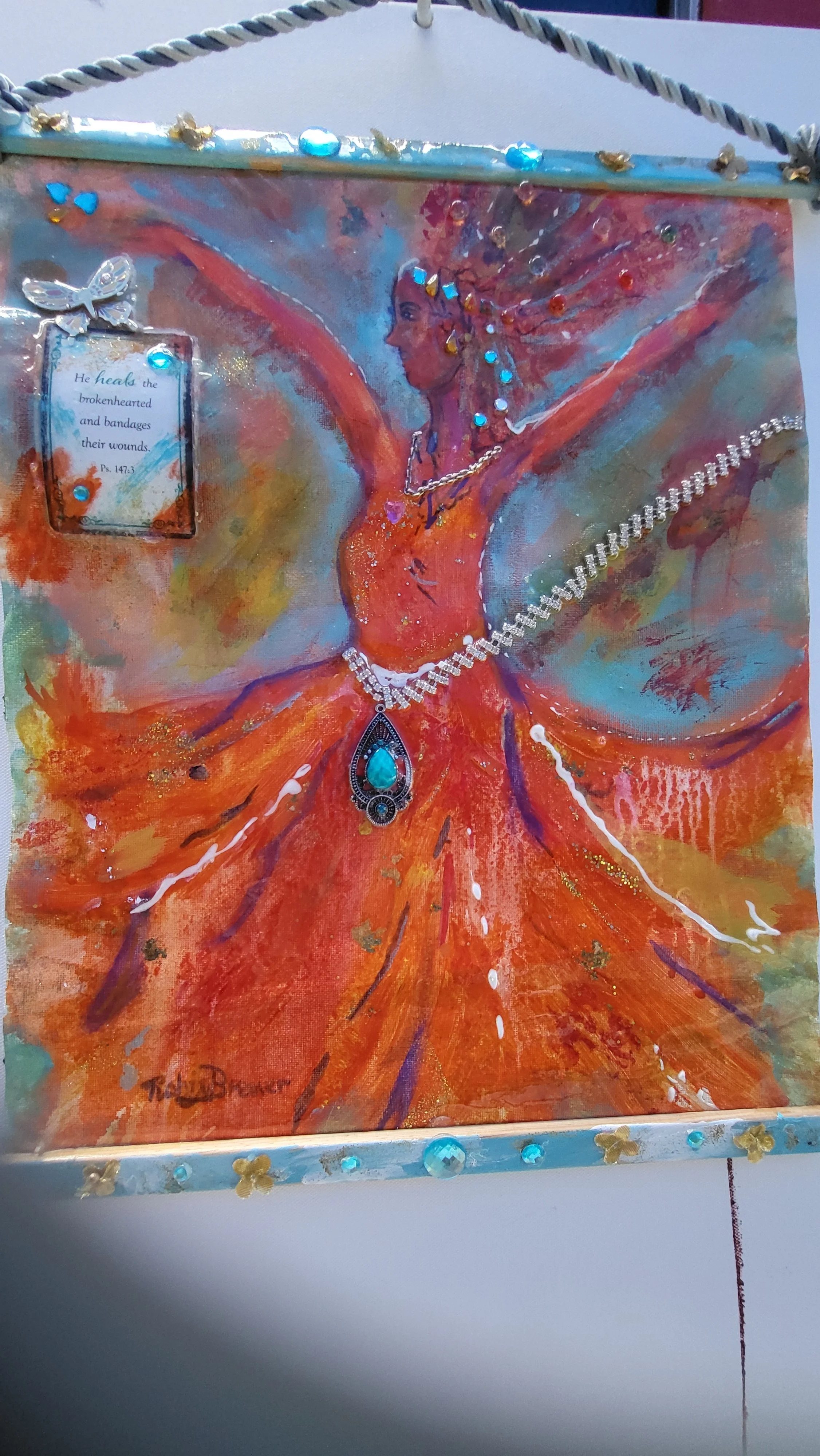
This original piece is currently hanging at Mountain View Art Council in Albertville in Alabama. Please contact them to purchase. 256-5717199.
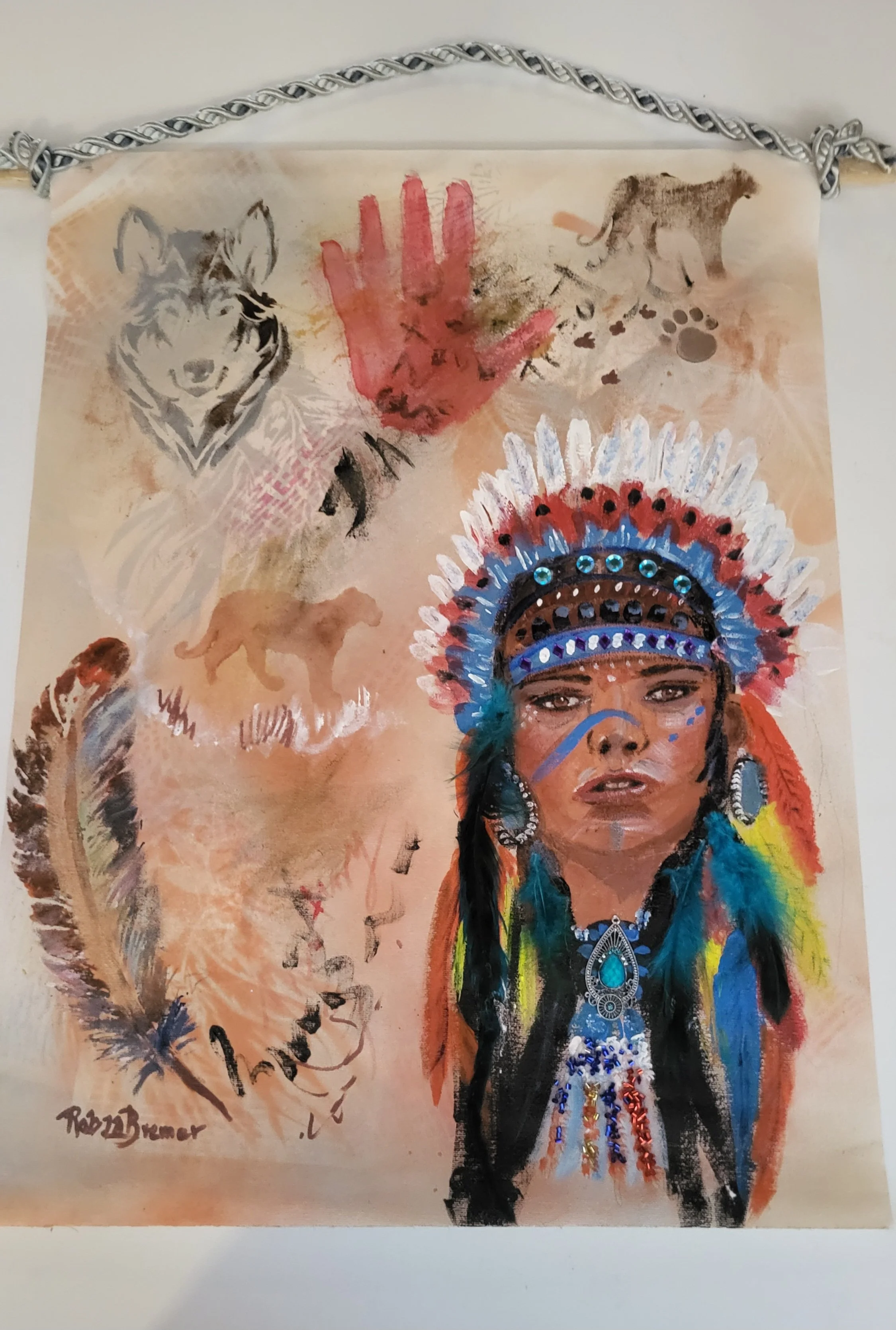
This 18×24 tapestry canvas piece is a profound tribute to Lozen, a late 19th-century Chiricahua Apache warrior, and strategist. History often remembers her brother, the great chief Victorio, and her close ally, Geronimo, but Lozen was a formidable force in her own right. Born in the 1840s, she defied the traditional gender expectations of her era. Rather than marrying, she chose the path of the warrior, mastering horsemanship, tracking, and combat strategy.
Her brother Victorio famously declared her his "right hand" and a "shield to her people," acknowledging that her counsel was indispensable in battle. Lozen was more than a fighter; she was a spiritual seer. According to Apache oral history, she possessed the power to detect the movement of enemies. By standing with her arms outstretched and her palms facing outward, she could feel a tingling sensation in her hands that told her the direction and distance of approaching cavalry.
For years, she used this gift to safely guide her people through the treacherous desert landscapes of Arizona and New Mexico, evading capture and fighting fiercely to protect her homeland. Her affectionate tribal moniker, "Little Sister," belied the massive, protective shadow she cast over the Chiricahua Apache.
Embellished with real feathers.
Beyond the physical paint and canvas, this artwork is designed as a visual invocation of Lozen’s spiritual legacy and the environment that forged her.
The Embodiment of Intuition: The layered imagery surrounding the portrait represents the unseen sensory world Lozen navigated. The prominent red handprint is a direct nod to her legendary shamanic ability to feel the energy of the battlefield and the approach of the enemy. It represents a spiritual radar and a literal hand of protection over her people.
The Spirit of the Desert: The earth-toned washes and charcoal dust textures evoke the rugged, high-desert terrain of the Southwest—the dust of the war trails, the smoke of the campfires, and the raw, unyielding earth she fought to protect.
Animal Allies: The spectral presence of the wolf and the cougar are not merely decorative; they signify the specific traits Lozen embodied. The wolf represents her fierce loyalty to her clan and her brilliant tactical mind, while the mountain lion honors her stealth, agility, and solitary strength as a tracker.
The Tapestry Format: By presenting this work as a hanging tapestry on loose canvas rather than a rigid, framed painting, the artwork honors the nomadic, resilient lifestyle of the Apache. It carries the weight of a sacred artifact or a painted lodge skin, transforming the piece from a modern portrait into a timeless historical testament.
This original piece is currently hanging at Mountain View Art Council in Albertville in Alabama. Please contact them to purchase. 256-5717199.
This 18×24 tapestry canvas piece is a profound tribute to Lozen, a late 19th-century Chiricahua Apache warrior, and strategist. History often remembers her brother, the great chief Victorio, and her close ally, Geronimo, but Lozen was a formidable force in her own right. Born in the 1840s, she defied the traditional gender expectations of her era. Rather than marrying, she chose the path of the warrior, mastering horsemanship, tracking, and combat strategy.
Her brother Victorio famously declared her his "right hand" and a "shield to her people," acknowledging that her counsel was indispensable in battle. Lozen was more than a fighter; she was a spiritual seer. According to Apache oral history, she possessed the power to detect the movement of enemies. By standing with her arms outstretched and her palms facing outward, she could feel a tingling sensation in her hands that told her the direction and distance of approaching cavalry.
For years, she used this gift to safely guide her people through the treacherous desert landscapes of Arizona and New Mexico, evading capture and fighting fiercely to protect her homeland. Her affectionate tribal moniker, "Little Sister," belied the massive, protective shadow she cast over the Chiricahua Apache.
Embellished with real feathers.
Beyond the physical paint and canvas, this artwork is designed as a visual invocation of Lozen’s spiritual legacy and the environment that forged her.
The Embodiment of Intuition: The layered imagery surrounding the portrait represents the unseen sensory world Lozen navigated. The prominent red handprint is a direct nod to her legendary shamanic ability to feel the energy of the battlefield and the approach of the enemy. It represents a spiritual radar and a literal hand of protection over her people.
The Spirit of the Desert: The earth-toned washes and charcoal dust textures evoke the rugged, high-desert terrain of the Southwest—the dust of the war trails, the smoke of the campfires, and the raw, unyielding earth she fought to protect.
Animal Allies: The spectral presence of the wolf and the cougar are not merely decorative; they signify the specific traits Lozen embodied. The wolf represents her fierce loyalty to her clan and her brilliant tactical mind, while the mountain lion honors her stealth, agility, and solitary strength as a tracker.
The Tapestry Format: By presenting this work as a hanging tapestry on loose canvas rather than a rigid, framed painting, the artwork honors the nomadic, resilient lifestyle of the Apache. It carries the weight of a sacred artifact or a painted lodge skin, transforming the piece from a modern portrait into a timeless historical testament.